
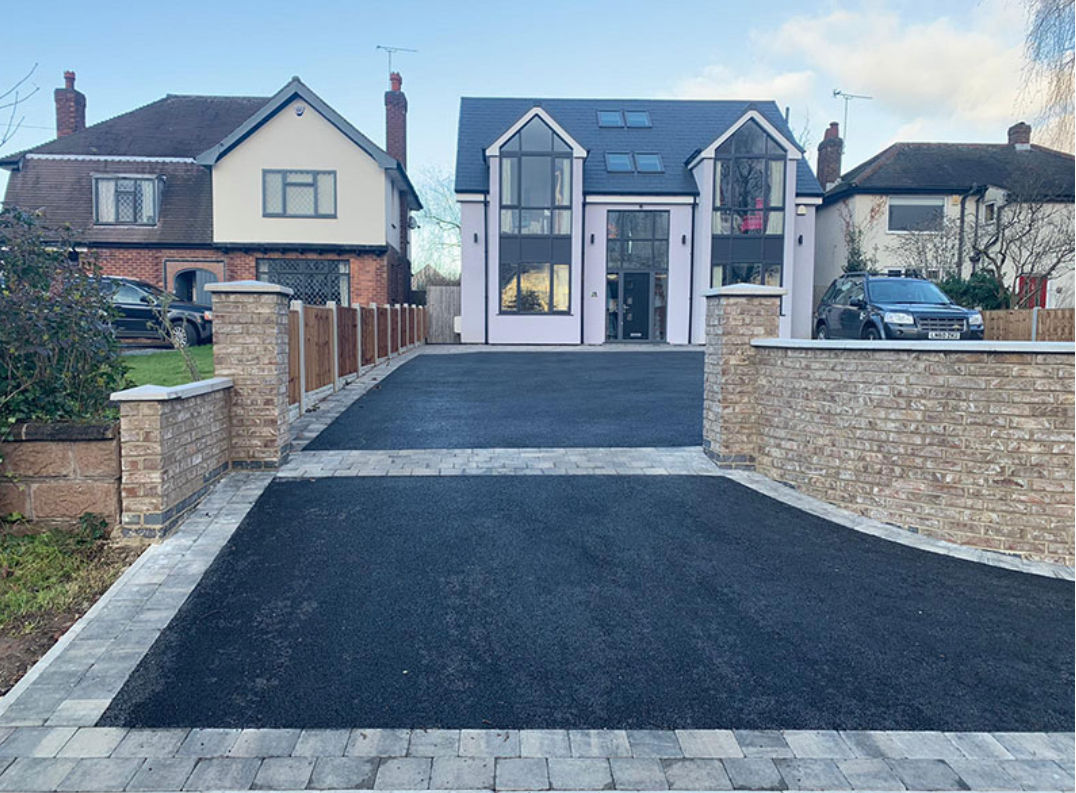
Tarmac & asphalt driveways.
A clean, practical finish for parking and access. We consider the ground, vehicle use, levels and drainage before specifying the supporting layers and asphalt surface.
A straightforward finish with carefully planned details.
Asphalt can suit a wide range of driveway layouts. The specification and laying method depend on access, area, expected use and the existing construction. Edges, entrances and drainage are planned alongside the surface.
- Continuous appearance
- Laid using a method suited to the site and access
- Vehicle-use timing confirmed for your installation
- Kerbs and borders define the edges
Built around use.
The proposed construction considers the vehicles and movements the driveway needs to accommodate.
Defined edges.
Kerbs and borders form the transition to lawns, paths and adjoining surfaces.
Water routes considered.
Finished levels and drainage need to work together at the house and site boundary.
Is tarmac right for you?
Pros
- Suits a wide range of driveway layouts
- Continuous appearance
- Pairs with block or kerb borders
- Routine sweeping and rinsing
Considerations
- Not permeable, so drainage needs planning
- Fewer colour choices than resin or block
- Can soften slightly in very hot weather when new
Beneath the finish
One engineering control process. Surface-specific construction.
Your driveway needs support suited to the ground and expected vehicle use. We review the existing construction, levels, drainage and edge restraints, then explain the recommended route and any further investigation needed.
- Base depth and compaction engineered for the loading expected
- Falls so water runs off correctly
- Edge restraint and kerb lines
- Thresholds and levels
- Access for plant and deliveries
Structure First. Surface Second.
Why what's underneath matters.
Drag the handle to compare a rushed shallow dig with the way we build. An illustration, not a specification — your site sets the real depths.
- Can sink and rut
- No route for water
- Exposed to frost movement
- Built around your ground
- Drainage planned in
- Depths written into your proposal
Care for the surface from handover.
From handoverReopening and loading+
Follow the reopening and loading advice supplied for your installation.
As neededAsk promptly+
Ask promptly about fuel spills, damaged edges or emerging cracks rather than waiting for a fixed maintenance interval.
Know what happens next.
- 1.
Assess your site.
Tell us how you want the space to look and work. We review the existing surface, levels, drainage and access, and discuss suitable options.
- 2.
Agree your proposal.
Your written proposal explains the recommended construction, materials, scope and price, including allowances and anything still to confirm.
- 3.
Install and hand over.
We carry out the agreed work, review the finished project with you and explain the care and reopening guidance for your installation.
Understand what your price includes.
Your proposal brings preparation, supporting construction, materials and finishing details into one scope. It explains the work included, any allowances, exclusions and items that need further assessment.
If you want to explore a different budget, we can discuss the materials, detailing or extent of the project while keeping the preparation your site needs.
Tarmac questions.
How long before I can drive on it?+
Follow the timing confirmed for your installation. Material, weather, vehicle loads and site conditions affect when the surface can be used; do not rely on a general time estimate.
Can you lay tarmac over my old drive?+
Only if the existing base is sound. We assess this before recommending an overlay.
Is tarmac permeable?+
No — so drainage has to be designed in. Your proposal shows exactly where the water will go.
Let's plan your tarmac driveway.
Tell Dan what you want to change. We'll discuss your priorities, review the site and explain the proposed work and price in writing.
Request Your Site AssessmentWe'll contact you to agree a visit time.